
Home · Destinations · Bwindi
Bwindi Impenetrable Forest
A rainforest old enough to have survived the last ice age, holding roughly half the world's remaining mountain gorillas — and four trailheads that are hours apart and easy to confuse.
Bwindi sits along the edge of the Albertine Rift in south-western Uganda, a dense, steep, permanently wet forest that runs from about 1,160 to over 2,600 metres. The English name is accurate: off the trails it is genuinely close to impassable. It is a UNESCO World Heritage Site and, for gorilla trekking, the most important forest on earth.
The four sectors
This is the thing most first-time visitors get wrong. "Bwindi" is not one place you arrive at — it is four trailheads around a large forest, each with its own habituated families, its own visitor centre and its own lodges. Getting between them takes hours, so your permit sector decides where you sleep the night before.
Ruhija — east
The highest sector and the closest to Lake Bunyonyi, about an hour and a half away, which makes it the natural choice on our itineraries. Cool, often misty, and the walking tends to be steep. Also the best birding in the forest.
Rushaga — south
The most habituated families of any sector, and the only place offering the gorilla habituation experience — four hours with a family being habituated, rather than one hour with one already used to people. Two to three hours from the lake.
Nkuringo — south-west
The hardest terrain, dropping steeply into the forest and climbing back out. People who have done several treks often name this one as the best. Two to three hours from the lake.
Buhoma — north
The original sector, with the longest history of tourism and the most developed village around it. Reached most easily from the north, which makes it the sensible choice if you are coming down from Queen Elizabeth rather than up from Kigezi.
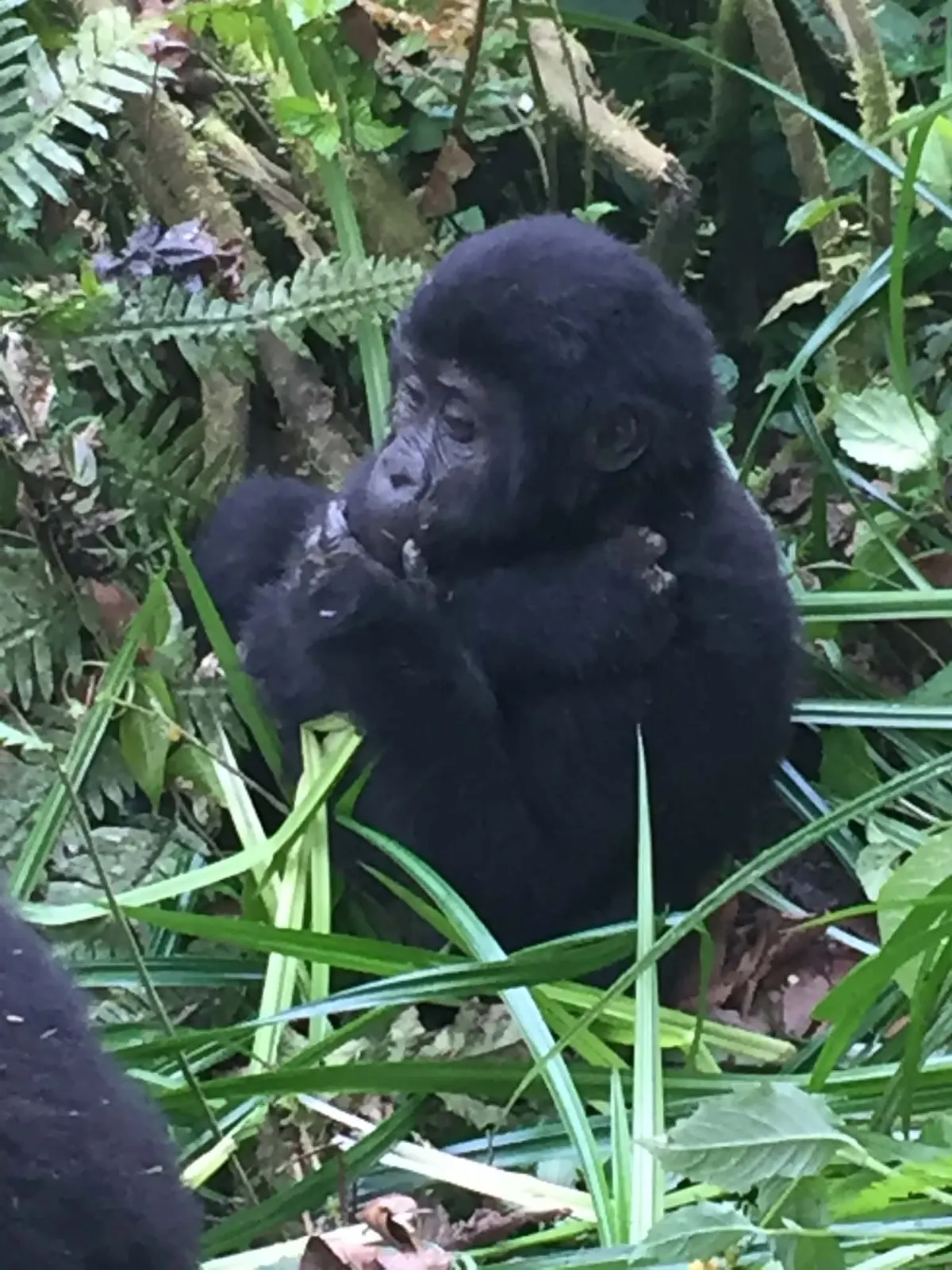
What a trek day looks like
Breakfast early, then the visitor centre by about eight for the briefing. You are put into a group of eight and assigned a gorilla family and a ranger guide. Trackers have been out since first light following yesterday's nest site, and they radio in a position. Then you walk.
Anything from forty minutes to six hours, and you cannot know in advance. When you reach the family you put your bags down, keep seven metres back, and stay for one hour. Then you walk out.
Beyond the gorillas
Bwindi has around 350 bird species including a couple of dozen Albertine Rift endemics, and a large population of habituated-shy forest elephants that almost nobody sees. The Batwa community walks around the forest edge are worth doing but should be chosen carefully — we only use ones the community itself runs and takes the money from.
Not sure which sector?
Tell us how fit you are, how long you have, and where else you want to go — the sector should follow from that, not the other way round. Ask us →